A customer opens ChatGPT and types “best [your category] near me,” or “who should I hire to fix my leaking flat roof.” A name comes back. You want it to be yours. The short version of how to get recommended by ChatGPT: give the engines a clear, consistent picture of who you are, publish pages that answer the exact questions your buyers ask out loud, and get other credible sites to mention you by name. Do those three properly and your business becomes quotable. Skip them and you stay invisible, however good the work you actually do. Those three moves carry over to the other assistants, but the emphasis shifts: Perplexity surfaces its sources far more prominently in the answer itself, which changes what is worth optimising for — we go through it in how to appear in Perplexity.
It helps to know what you’re aiming at. When ChatGPT searches the web it isn’t consulting some private ranking of its own. OpenAI says the feature “leverages third-party search providers, as well as content provided directly by our partners” (OpenAI, 31 October 2024). Read that plainly. It leans on an existing search index and a handful of licensed publishers. It rewrites what it finds into a single answer. And when it browses live, it links back to a few sources. Perplexity and Google’s AI Overviews run on roughly the same idea. So getting recommended isn’t a trick. You’re trying to be the page, or the mention, that survives the reassembly.
First, make sure ChatGPT can actually read you
This is the least glamorous step. It also quietly sinks the most businesses. Before you write a word of new content, confirm the machines are allowed in.
Open your robots.txt file and read it line by line. The crawler that decides whether you can turn up in ChatGPT search is OAI-SearchBot. GPTBot is the separate one OpenAI uses to gather training data. I have lost count of the sites quietly blocking both because someone pasted a “stop the scrapers” snippet in 2023 and nobody has looked since. OpenAI documents each crawler and how to let it in — any website, in their words, can “choose to appear” in ChatGPT search (OpenAI Bots documentation). Deciding to block AI crawlers is a legitimate call. Doing it by accident while wondering why ChatGPT has never heard of you is a different and sadder situation.
Then check how your site builds each page. If your prices, service descriptions or location only appear after JavaScript runs, a crawler that doesn’t execute scripts sees an empty shell. Your best content might be invisible to the exact systems you’re trying to reach. Before any of this, it’s worth running a quick baseline to see where you actually stand — our guide on how to check if ChatGPT and Perplexity recommend your business walks through that in an afternoon.
Be one business, described the same way everywhere
Language models are constantly doing entity resolution — deciding whether “Acme Plumbing,” “Acme Plumbing Ltd” and “Acme Plumbing & Heating” are one company or three. Every inconsistency makes you blurrier, and a blurry entity is a nervous recommendation the model would rather not make.
So pick one name, one address, one phone number, and one crisp description of what you do. Make it identical across your website, Google Business Profile, LinkedIn, industry directories and review sites. Add structured data to the pages that matter, using the vocabulary at schema.org — LocalBusiness, Organization, FAQPage, Product. Structured data won’t win you the recommendation on its own, but it hands the engine a machine-readable version of the facts instead of asking it to guess. Guessing is where you lose.
Write the page that answers the real question
Most business websites speak to the owner, not the buyer. They open with a mission statement and bury the useful bit — what it costs, how long it takes, whether you cover the customer’s town — four paragraphs down. Engines lift passages that stand on their own, so hand them one.
Put the answer at the top. If someone asks “how much does a wedding photographer cost,” the page most likely to get quoted is the one that says, near the top, that a full day runs from a specific figure and here’s what changes it. Publish what only you know: real prices, real timelines, numbers from your own jobs. Generic advice is already sitting in a thousand pages the model has swallowed. A specific figure with your experience behind it is quotable in a way “we pride ourselves on quality” never will be. And write out your key facts as text. Do not hide them inside an image — engines still read words far better than pictures.
An FAQ section earns its keep here, because it lets you answer the conversational, slightly awkward questions people actually type: “do you work weekends,” “what if it rains,” “can you invoice my company.” Those long, natural phrasings are exactly the shape of prompts users give ChatGPT.
Get mentioned where the engines already look
Here’s the part owners least want to hear: the most powerful lever usually isn’t on your own website at all. When you read the sources these engines cite, they’re frequently not company homepages. They’re a Reddit thread, a comparison article in a trade publication, a directory listing, a review roundup, the notes from a podcast nobody remembers recording. Engines lean on third-party context for a sensible reason — a company describing itself is the least reliable witness on the subject of that company.
Which means part of the work is turning up, accurately, in the places these systems already trust. Claim and complete the directory entry that keeps surfacing for your category. Gather genuine reviews across more than one platform. Answer a real question, usefully, in the forum where your industry gets argued about. Get into the “best X in [city]” roundup that owns your category term. None of it is quick and none of it is glamorous, and it moves your odds of being recommended more than another homepage rewrite ever will.
The uncomfortable one: if you launched recently, the model has never heard of you
A base language model only knows what was in its training data up to a cutoff date. If you opened your doors a few months ago, the model simply has no memory of you. Your only route in is live browsing. The engine searches the web in the moment and cites what it finds. That makes everything above more urgent, not less. You can’t wait for the next training run to absorb you. You have to be findable, readable and credible on the open web right now. Then the moment ChatGPT goes looking, you’re already there.
Does this actually work — and when should you just hire someone?
Sometimes it works fast. A clean robots.txt, a genuinely useful pricing page and three fixed directory listings can flip a business from invisible to occasionally-cited inside a few weeks. Other times you’re looking at months of content and relationship-building before an engine trusts you enough to say your name. Both are normal. Anyone promising a fixed timeline hasn’t done this across enough sites.
And to be straight about it: a lot of the time hiring is the right move. Say you’re in a crowded category. Maybe you sell across several countries, or you need this to slot into an SEO program you already run. Then a good agency or an experienced freelancer will get you there faster than you can. And it isn’t close. They’ve watched this pattern play out across dozens of businesses and they know which lever tends to move first. The one thing worth doing before you hire is measuring. Then you’re briefing from evidence rather than a hunch. And there’s a number on record from before anyone started billing you. If you’re weighing where effort belongs, SEO vs GEO vs AEO: what actually changes for your business is a useful map.
Where Hepteon fits
Everything above is a loop: check access, tidy your identity, write the answer, earn the mention, then measure whether any of it moved. The loop works. It also tends to die quietly around week three, because you have a business to run and the checklist doesn’t chase you.
That’s the gap Hepteon is built for. Seven AI agents run a website end to end, one for each of the heptathlon’s seven events — Strategist, Connector, Technical, Writer, Amplifier, Results and Publisher. Between them they watch how you show up across search and AI engines. They clear whatever blocks the crawlers, write the pages that answer real buyer questions, and report what genuinely moved against your goal. Agencies and freelancers can run the whole thing white label for their own clients. It is the same loop at portfolio scale, not one site at a time.
Start small, though. Ask ChatGPT the question your best customer would ask, and see whose name comes back. If it isn’t yours yet, you now know where to begin.
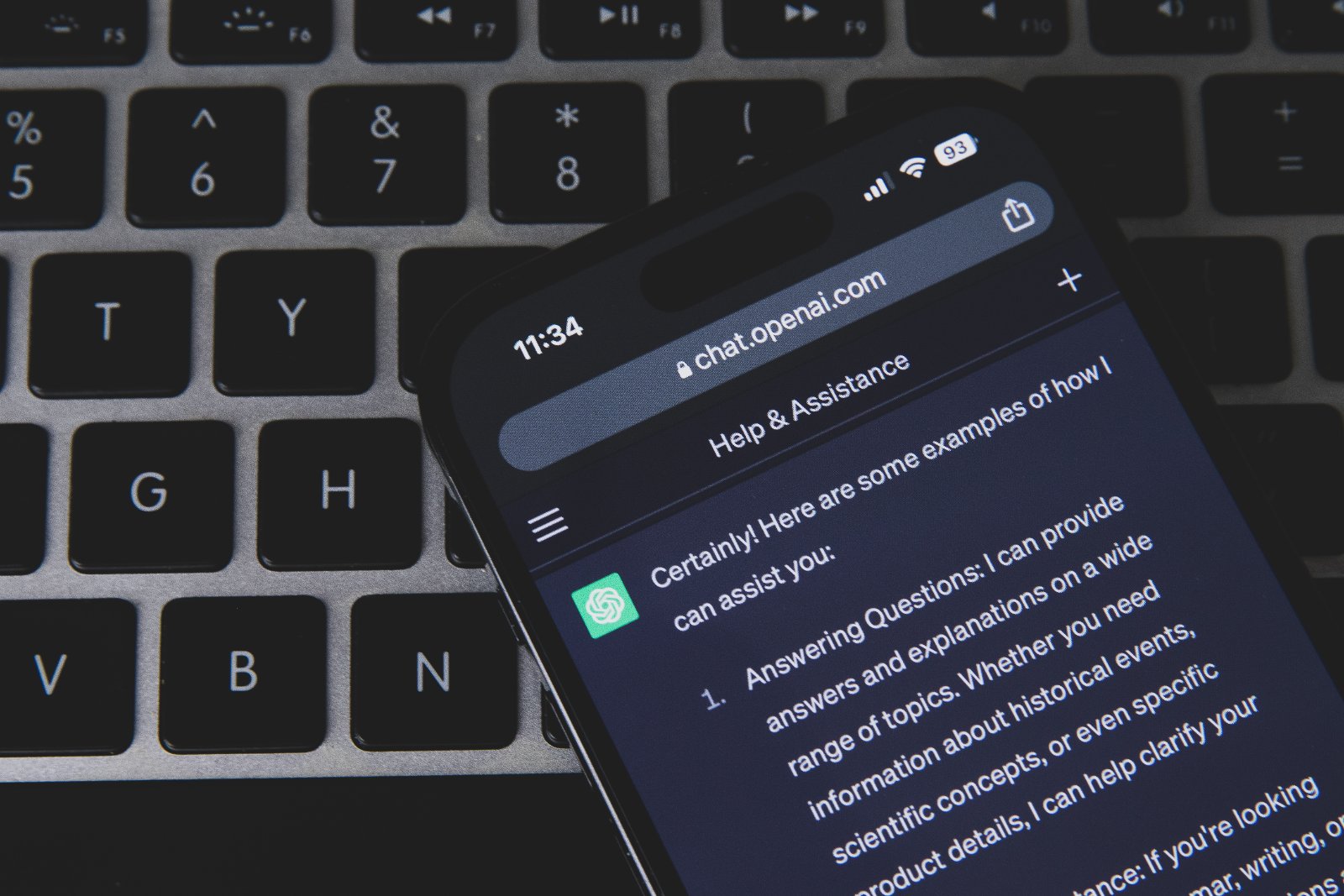
Image: “Smartphone with ChatGPT on keyboard” by Jernej Furman, via Wikimedia Commons, licensed under CC BY 2.0. Image resized.
Frequently asked questions about getting recommended by ChatGPT
AI recommendations are still scarce today: a 2026 SOCi analysis found ChatGPT recommended just 1.2% of local businesses, versus 7.4% on Perplexity and 11% on Gemini. The answers below cover the fixes that move those odds.
Give the engines a consistent identity, the same name, address and description everywhere, publish pages that answer your buyers’ exact questions with specific facts, and earn mentions on third-party sites the engines already trust. First, confirm the OAI-SearchBot crawler is allowed in your robots.txt so ChatGPT can read you at all.
ChatGPT search uses OAI-SearchBot to discover and surface pages, while GPTBot gathers training data separately. If either is blocked in robots.txt, make sure that is intentional, because many sites block them by accident and then never appear in AI answers.
AI recommendations are far more concentrated than Google results. Consistent listings across platforms, genuine reviews, structured data and credible third-party mentions are what lift a business above the confidence threshold these engines apply before they name anyone.
You need both, but third-party context often carries more weight. Engines frequently cite directories, review roundups and forum threads over a company’s own homepage, because an independent source is more trustworthy than self-description. Aim to be accurate and present where they already look.
It varies. A clean robots.txt, a genuinely useful pricing page and a few fixed directory listings can help within weeks, while competitive categories can take months of content and relationship-building. Anyone promising a fixed timeline has not done this across enough sites.